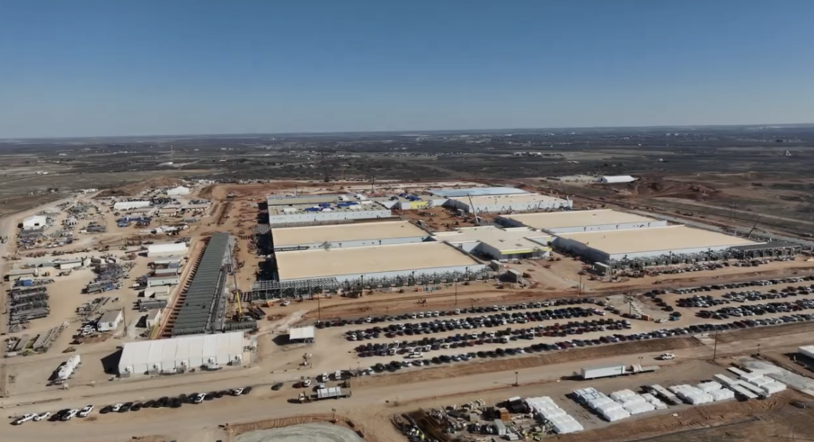

Over the last year, I have been reading AI news with a strange mix of curiosity and unease. The numbers keep getting bigger. Every few weeks there is another multi-billion dollar data center project, another gigantic chip order, another private financing round at a valuation that would have sounded science-fictional three years ago.
At some point, you have to ask: is this AI investment wave a rational long-term bet, or are we replaying an old story where optimism and fear of missing out overshadow basic questions about value and risk?
1. The size of the bet, in real numbers
Let us start with the infrastructure. One market study estimates that global data center equipment and infrastructure spending reached about 290 billion dollars in 2024, and that this market will grow to 1 trillion dollars by 2030, driven largely by AI workloads and hyperscaler expansion.
Another analysis from Morgan Stanley, cited in The Guardian, estimates that global spending on data centers will total 3 trillion dollars between now and 2028. About 1.4 trillion dollars of that could be covered by the cash flow of the big US tech companies, which means the remaining 1.6 trillion dollars likely has to come from debt and outside investors.
On top of this, one recent breakdown of earnings calls and forecasts shows how quickly expectations are moving. In early 2025, estimates for Big Tech capital expenditure were around 280 billion dollars. By the end of the year, that figure had been revised up to 405 billion dollars, a 31 percent jump in less than twelve months, largely attributed to AI infrastructure spending.
The financing mix is already shifting. According to the same analysis, companies have borrowed around 75 billion dollars in just a few months specifically for AI data centers. Capex tied to AI is now approaching 94 percent of operating cash flows, up 18 percentage points from 2024, and JPMorgan estimates that data center buildouts will require 1.5 trillion dollars in investment-grade bonds over the next five years, with 300 billion dollars in bonds potentially issued as soon as next year.
One separate report on credit markets notes that data center debt issuance in 2025 has already jumped 112 percent year-over-year, to 25 billion dollars, as companies race to fund AI-ready facilities.
That is the top-down picture of AI investment. The bottom-up deals are just as striking.
2. OpenAI, Stargate and trillion-scale ambitions
OpenAI sits at the heart of this story. A Financial Times piece reports that its “Project Stargate” is now planned as a network of six US sites with an estimated cost of 400 billion dollars, targeting up to 10 gigawatts of capacity, roughly equivalent to ten nuclear reactors.
A data-driven review of the AI boom adds another layer: based on reported deal terms, OpenAI has recently signed four major agreements with suppliers that together could lead to 30 gigawatts of new data center capacity. At an estimated 50 billion dollars per gigawatt of capacity, this implies up to 1.5 trillion dollars of infrastructure spending tied to these deals alone, significantly more than OpenAI’s roughly 500 billion dollar private valuation.
The same analysis notes that OpenAI’s internal forecasts expect peak negative cash flow of more than 40 billion dollars in 2028, with positive cash flow only after 2030. Current revenue expectations of about 13 billion dollars in 2025 are impressive by any normal standard, but small compared to the capital commitments swirling around the company.
In parallel, media reports show that OpenAI has discussed raising equity at valuations around 150 billion dollars and then later reached valuations closer to 500 billion dollars through secondary share sales.
3. Meta, Blue Owl and the rise of private credit
OpenAI is not alone. Meta’s Hyperion project in Louisiana is becoming a reference point for how AI data centers are being financed. Reuters and Barron’s report a financing package of 27 to 29 billion dollars for Hyperion, largely structured as private debt. Private credit firms like Pimco and Blue Owl are providing the bulk of the funding, with Pimco buying about 18 billion dollars of bonds and BlackRock committing over 3 billion dollars, while Blue Owl contributes roughly 7 billion dollars in equity.
According to these reports, Hyperion could reach 2 gigawatts of power capacity by 2030, with a long-term goal of 5 gigawatts, and Meta’s CEO has floated a scenario where the company might invest more than 600 billion dollars in US infrastructure by 2028 if AI development continues at its current pace.
This is not niche capital. It brings in some of the largest asset managers and pension investors in the world and locks them into the AI investment story for decades.
4. What “circular financing deals” actually mean
In this context, the term “circular financing deals” has started to appear in analyst notes. A Wall Street Journal piece and related commentary highlight how some AI deals resemble loops more than straightforward vendor contracts.
In a typical circular structure:
- An AI company like OpenAI commits to buy massive volumes of compute from a cloud provider.
- That cloud provider, such as Oracle, raises debt and equity to build the needed data centers, often working with chip suppliers like Nvidia or AMD.
- Chip suppliers then invest in the AI company itself or structure equity-linked deals that give them upside if the AI company’s valuation rises.
- Private-credit firms and banks finance the whole stack, lending against long-term purchase commitments that are themselves dependent on AI adoption and pricing assumptions.
On paper, everyone earns revenue. In practice, the underlying economic risk is highly concentrated.
5. Big investors, FOMO and the bubble question
The striking part is that the world’s largest investors are fully engaged in this loop. BlackRock has repeatedly commented on the AI theme and its chief fixed income officer, Rick Rieder, has said he does not believe we are in a full-blown AI bubble, even as his firm allocates billions into related credit and equity positions. Private-credit specialists like Blue Owl are raising vehicles measured in the hundreds of billions to finance these projects. Bank of America’s fund manager survey shows how conflicted sentiment has become: around 54 percent of investors now say AI-related assets are in bubble territory, and yet positioning remains aggressively pro-growth. In other words, the fear of missing out is stronger than the fear of a correction. This is the emotional engine behind today’s AI investment.
It is hard not to see echoes of past cycles, where sophisticated players said “this time is different” even as they piled into the same trades.
6. The monetization gap: OpenAI vs Claude
Behind the impressive infrastructure numbers sits a basic question: who is converting this investment into revenue?
OpenAI and Anthropic provide an instructive contrast. OpenAI expects about 13 billion dollars in revenue in 2025, 70 percent of which comes from consumer ChatGPT subscriptions. Anthropic, meanwhile, earns roughly 80 percent from enterprise customers and projects 26 billion dollars in ARR by 2026, making it more diversified and more predictable.
A SaaS comparison places Anthropic’s revenue per user at around 8x higher than OpenAI’s because of that enterprise focus.
This does not mean OpenAI will fail, but it shows that monetization models are diverging sharply.
7. Is this a bubble or a long build-out phase?
So, is this a bubble? The honest answer is mixed.
On one side, we have numbers that look like a once-in-a-generation infrastructure build-out: trillions for data centers, hundreds of billions in annual capex, and huge private-credit structures. On the other side, we see classic warning signs: debt rising faster than cash flow, valuations dependent on distant revenue forecasts, and investors who describe AI as a bubble risk while still crowding into AI-linked trades.
From my vantage point, AI investment today looks less like a late-stage mania and more like an early-to-middle phase of a very large, very risky transformation.
8. What this means for business leaders
For executive teams, the implications are clear:
- Anchor your AI investment in a measurable business case.
- Watch the financing structures behind your partners.
- Look beyond hero metrics and hype curves.
- Benchmark partners by monetization performance, not only by model quality.
Because the question is no longer “Are we investing in AI?” but rather:
Where is our AI investment creating durable value, and where are we simply following the crowd?