There is something almost deceptive about the word “efficiency.”
It sounds simple. Universal. Almost obvious. Every executive wants it. Every company claims to pursue it. Yet when you step into real factories, hospitals, office buildings, laboratories, refineries, or data centers, the truth hits quickly. Efficiency is not a slogan. It is a discipline. And it does not happen by accident.
Over the past decade, I have seen organizations in every sector try to reduce energy usage, streamline processes, and eliminate waste. Most had the right intention but lacked the right architecture. Because efficiency, in today’s world, is not the outcome of a single initiative. It is the outcome of deeply integrated data: real time, contextual, automated, and aligned with business priorities.
This is where Schneider Electric has built something unique. They have redefined what efficiency looks like in modern energy and industrial environments. Not just for themselves. For their customers. Across thousands of facilities. Across dozens of industries. Across continents.
What follows is not a tribute. It is an exploration of how one company turned data into a living operating system for resilience, energy intelligence, and performance. And why the rest of the world is paying attention.
The World Is Spending Millions Solving the Wrong Problem
To understand Schneider Electric’s impact, you first need to understand the global context.
Data centers alone are expected to consume nearly 50 percent more electricity by 2025 according to Data Centre Magazine.
Utilities are spending close to 10 percent of their annual revenue modernizing the grid to cope with distributed energy resources, according to the IBM Institute for Business Value.
Factories lose 30 percent of their energy to waste, often because operators lack real visibility into machine performance. Deloitte’s Savola Foods case demonstrates exactly that: IoT and analytics revealed inefficiencies no human could detect.
Every year the numbers rise. More machines. More complexity. More energy demand. More volatility. More downtime. More waste.
And through all of this, most companies still rely on local dashboards, siloed systems, and maintenance schedules that assume machines behave like calendar events.
This is the real problem. Not energy prices. Not aging assets. Not even sustainability pressure.
The real problem is the absence of Data-Driven Productivity Solutions.
Schneider Electric stepped into that gap before most people understood how big the gap truly was.
The Framework: Turning Data Into an Operating System for Efficiency
Schneider Electric’s efficiency engine is built on three pillars:
- Real-time data capture
Sensors and controllers embedded in equipment, building systems, microgrids, and industrial assets generate a constant stream of operational intelligence. - Contextual analytics and prediction
AI and industrial analytics evaluate performance, detect anomalies, forecast energy use, and predict failures before they happen. - Automated or guided response
Systems can adjust loads, orchestrate energy flows, optimize equipment behavior, or trigger maintenance actions.
This combination sits at the heart of Schneider’s EcoStruxure ecosystem. EcoStruxure is not a single product, but a three-layer architecture that connects equipment, sensors, automation systems, and software into one unified operational view. At the first layer, connected devices gather real time data on energy use, temperature, load, performance, and equipment behavior. At the second layer, edge control systems manage that data in the moment, adjusting power flows, coordinating equipment, and maintaining system stability. The third layer brings everything together through applications and analytics, where trends are identified, anomalies are detected, and predictive insights guide operators toward better decisions.
AVEVA, Schneider’s industrial software arm, strengthens this top layer by providing advanced visualization, digital twins, and operational analytics that turn raw data into actionable intelligence. The result is an integrated system where energy, automation, and maintenance decisions no longer rely on guesswork. They are driven by real information, evaluated in real time, and delivered through true Data-Driven Productivity Solutions.
You see this pattern clearly when you examine real customer cases.
Data Centers: When Efficiency Becomes a Science
Data centers are the places where inefficiency becomes very expensive very fast.
One of the best examples comes from EcoDataCenter in Sweden. This customer operates one of the world’s most energy-efficient colocation facilities and relies on Schneider Electric’s EcoStruxure Data Center architecture. Their Galaxy VX UPS units operate at 99 percent efficiency, a level that dramatically reduces wasted energy compared to conventional systems. That number is not cosmetic. Traditional UPS systems typically operate between 94 and 96 percent. A jump from 96 to 99 percent means three times less energy lost to heat.
EcoDataCenter also used advanced sensors and analytics to fine tune thermal management. With real time data, even slight variations in temperature or load balancing can be corrected instantly. That adds up to significant reductions in power usage effectiveness.
These are not small gains.
They are the direct result of engineering an environment where data is the primary decision maker.
When Schneider Electric talks about sustainable data centers, this is what they mean. The industry expects a 50 percent increase in electricity demand by 2025. Efficiency cannot rely on better insulation or upgraded cooling hardware alone. It requires a complete rethinking of operational logic using Data-Driven Productivity Solutions.
Microgrids: Resilience Through Intelligence
One of the best illustrations of data-enabled efficiency is the microgrid at the Institut des Métiers et des Techniques (IMT) in Grenoble.
The campus is a real-world educational environment with fluctuating loads, renewable energy sources, and variable weather conditions. The microgrid integrates solar, storage, and smart controllers. But what sets it apart is its intelligence.
Sensors continuously monitor consumption, production, weather data, and energy flow across the campus.
The control system evaluates all variables in real time and determines the optimal way to distribute energy.
Storage is dispatched strategically. Renewable generation is prioritized. Loads are shifted automatically.
The result is a living system that does not wait for an operator to push a button. It optimizes itself.
The broader utility world is moving in this direction too. IBM’s research shows utilities are allocating close to ten percent of revenue to grid modernization because outdated infrastructure cannot respond fast enough to the variability of renewable energy and load growth.
The IMT microgrid is exactly the type of model utilities need: a distributed architecture powered by Data-Driven Productivity Solutions.
Manufacturing: When Machines Talk, Downtime Disappears
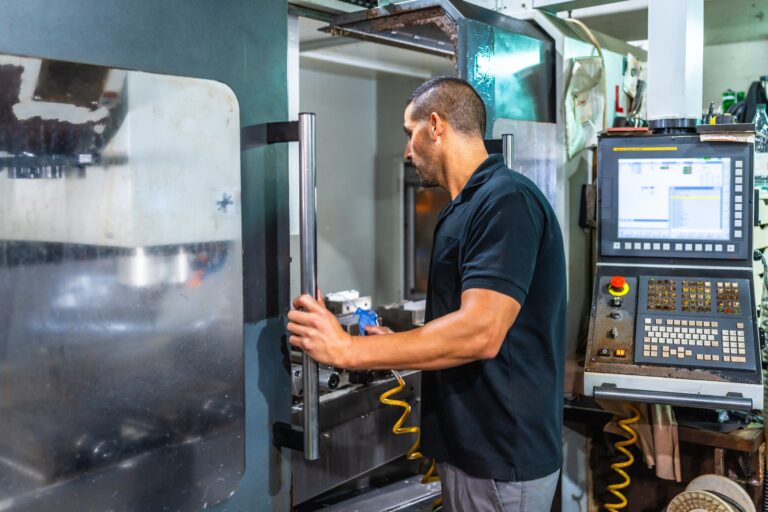
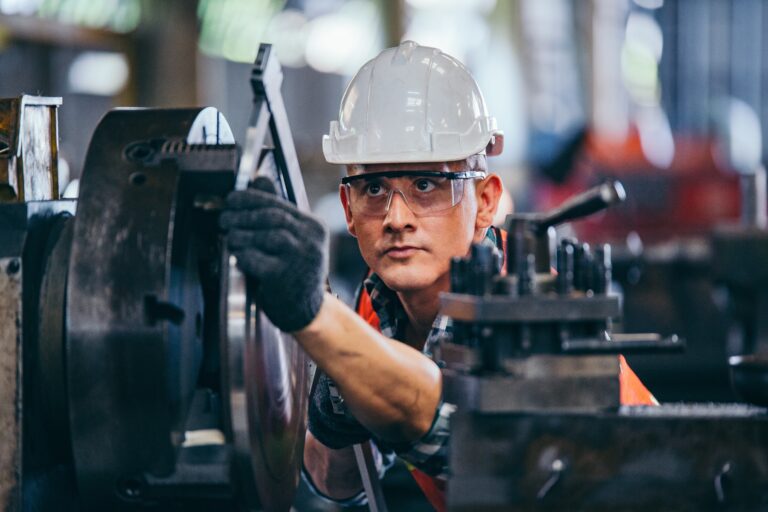
Manufacturing environments are where predictive maintenance proves its worth the fastest.
Schneider Electric’s industrial clients have seen this repeatedly.
Their August 2024 insight on predictive maintenance explains how real time sensors, automation, and analytics transform maintenance from reactive to predictive. This is not rhetoric. It is performance.
Deloitte’s work with Savola Foods revealed similar results. IoT sensors enabled real time monitoring of production and equipment health, reducing downtime and improving responsiveness.
Cognizant’s industrial IoT platform connected more than 1,000 machines across 100 facilities, delivering multi-year cost savings by identifying hidden inefficiencies.
Academic research reinforces these results:
• 22 percent reduction in downtime
• 18 percent energy reduction
• 15 percent improvement in resource utilization
These results are consistent across industries because the underlying principle is universal.
When machines speak through data and analytics translate what they say, maintenance becomes proactive, and operations become measurably more efficient.
This is the practical application of Data-Driven Productivity Solutions.
Buildings and Corporate Energy Performance: The Hidden Goldmine
Buildings often hide more waste than factories.
Le Hive, Schneider’s ISO 50001 certified building in France, proved that point. Through centralized energy management, data visibility, and analytics, the building achieved:
- 41 percent energy improvement
• 133,167 GJ of energy saved
• 282,000 dollars in avoided annual cost
In the electronics sector, Samsung SDS used analytics to uncover energy waste in a system with 135 million dollars in annual energy expense. That number alone explains the size of the opportunity. Even small percentage improvements translate into massive financial returns.
Other building studies, such as those from Your Comms Group, report roughly 20 percent reductions in energy consumption from IoT integration.
The conclusion is straightforward. Energy efficiency is not a hardware problem. It is a visibility problem.
The moment data becomes real, traceable, and actionable, inefficiencies surface that were previously invisible.
Scaling the Impact: 347 Million Tons of CO₂ Avoided
Schneider Electric’s digital energy solutions have helped customers save or avoid 347 million tons of CO₂ since 2018, according to Salesforce’s customer impact report.
That number is the combined annual emissions of an entire G7 nation. It reflects thousands of small optimizations across energy, automation, and operations. None of those results happened because of a single major project. They happened because thousands of organizations adopted Data-Driven Productivity Solutions at various stages of maturity.
Large scale sustainability impact is never the result of one transformation. It is the compounding effect of many local decisions improved by data.
The Architecture Behind the Outcomes
Across every case, every geography, and every sector, four principles remain constant.
- Visibility drives accountability
You cannot fix what you cannot see. And most energy or operational waste is silent. Real time data provides a level of transparency that reveals problems before they escalate.
- Prediction beats reaction
Scheduled maintenance is based on assumptions. Predictive maintenance is based on truth. Data shifts the balance from responding to crises to preventing them.
- Integration beats isolated tools
The biggest gains happen when systems communicate. When building management systems inform energy systems. When machine data informs production planning. When renewables talk to storage. Integration is where efficiency compounds.
- Automation makes improvements sustainable
Human vigilance is not scalable. Automated optimization ensures performance does not depend on the attention span of an operator.
These four principles are the backbone of Data-Driven Productivity Solutions and align perfectly with the way Schneider Electric structures its client architecture.
What Leaders Can Learn From Schneider Electric
Schneider Electric did not reinvent efficiency by adding more hardware. They reinvented it by rethinking how data connects energy systems, buildings, factories, and digital infrastructure into one coherent operational ecosystem. They built a model where decisions are not delayed by uncertainty. They are sourced from real information.
And this is the leadership lesson.
Efficiency is no longer a project. It is not a performance initiative. It is not a department.
Efficiency is a data practice.
Organizations that excel in efficiency behave as though data is the bloodstream of operations. They treat visibility as a right, not a luxury. They assume prediction is the default mode, not an advanced feature. And they understand that sustainable performance will never be achieved through manual effort alone.
What Schneider Electric shows the world is simple.
Efficiency is not about doing more with less.
Efficiency is about understanding more, faster, and acting smarter.
In a world of rising energy costs, tighter margins, unpredictable markets, and rapid technological evolution, this is the capability that separates resilient organizations from vulnerable ones.
For every company looking to modernize their operations, reduce energy waste, and build a stronger foundation for the future, the message is clear.
Efficiency will belong to the organizations that embrace a disciplined, integrated, and intelligent approach to data.
This is the path forward.
And Schneider Electric has laid out a blueprint that the rest of us can learn from.
References
- EcoDataCenter – Sustainable Data Center (Case Study)
Schneider Electric
https://www.se.com/us/en/work/campaign/life-is-on/case-study/ecodatacenter/
- IMT Grenoble Microgrid Case Study (PDF)
Schneider Electric
https://www.se.com/uk/en/download/document/998-21080285/
- Le Hive ISO 50001 Efficiency Case
Clean Energy Ministerial (Energy Management Working Group)
https://www.cleanenergyministerial.org/content/uploads/2022/09/cem-em-casestudy-schneiderelectric-france.pdf
- “Industrial Artificial Intelligence: Optimizing Energy Efficiency”
Schneider Electric Industrial Blog
https://blog.se.com/industry/2024/11/29/what-is-predictive-ai/
- “Predictive Maintenance Built on Digitization and Automation”
Schneider Electric Newsroom
https://www.se.com/za/en/about-us/newsroom/news/press-releases/predictive-maintenance-is-built-on-digitisation-and-automation-66d079e077e7e9e2ad09f03e
- “Using Data to Become a Customer-Centric Machine”
Medallia – Schneider Electric Customer Story
https://www.medallia.com/blog/schneider-electric-using-data-to-improve-customer-experience/
- “Eco-Efficiency Case Study Summary: Schneider Electric”
IndustryX
https://industryx.org/eco-efficiency-case-study-summary-schneider-electric/
- “How Schneider Electric is Leading in Sustainable Data Centres”
Data Centre Magazine
https://datacentremagazine.com/news/schneider-electric-leading-in-sustainable-data-centres
- Schneider Electric + Salesforce Customer Impact Report
Non-Schneider / Independent Industry Sources
- “IoT and the Benefits of Smart Manufacturing: Savola Foods”
Deloitte Case Study
https://www.deloitte.com/tw/en/services/consulting/case-studies/iot-and-the-benefits-of-smart-manufacturing.html
- “Industrial IoT Platform for Smart Manufacturing”
Cognizant Case Study
https://www.cognizant.com/us/en/case-studies/industrial-iot-platform
- “Power Grid Modernization”
IBM Institute for Business Value
https://www.ibm.com/thought-leadership/institute-business-value/en-us/report/power-grid-modernization
- “Energy Efficiency Through Analytics for Electronics Manufacturing”
Samsung SDS Case Study
https://www.samsungsds.com/eu/case-study/ehs-casestudy-1.html
- “Framework for IoT-Enabled Smart Manufacturing” (Academic Research)
arXiv.org (2025)
https://arxiv.org/abs/2502.03040
- “IoT and Energy Efficiency for a Sustainable Future” (Industry Case Review)
Your Comms Group
https://yourcommsgroup.com/case-study/iot-energy-efficiency-for-sustainable-future/