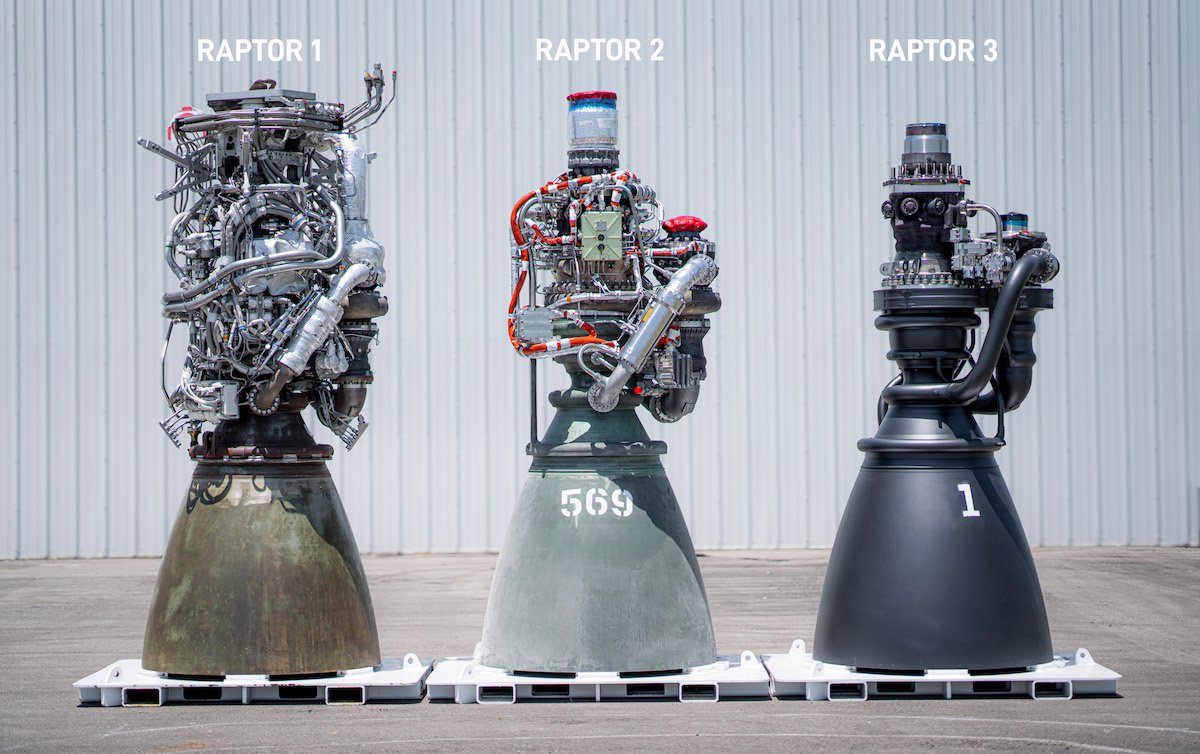

The evolution of SpaceX’s Raptor engine, from Raptor 1 to Raptor 3, provides a masterclass in engineering excellence, project management, and process efficiency. The journey highlights how simplifying complex systems can drive superior performance while maintaining agility, creativity, and innovation. Drawing on lessons from this rapid development, businesses across industries can adopt similar strategies to enhance their own practices.
Key Insights and Lessons
-
Iterative Development and Continuous Improvement
SpaceX’s evolution of the Raptor engine underscores the power of iterative design. Starting with Raptor 1 and progressing through Raptor 2 to Raptor 3, each iteration incorporated learnings to refine and simplify the engine. This approach, formalized as “The Algorithm,” follows five key steps: challenging requirements, deleting unnecessary parts, simplifying designs, increasing production speed, and automating only after refinement. This continuous improvement cycle highlights the value of learning from real-world data and embracing temporary complexity to achieve long-term optimization. Businesses can adopt this mindset to refine their products, processes, and strategies incrementally.
-
Reducing Complexity through Part Elimination
The Raptor 3 design achieved remarkable simplification by integrating components into larger, more efficient assemblies and eliminating external plumbing and wiring. This approach significantly reduced the part count and overall weight, showcasing Elon Musk’s principle that “the best part is no part.” However, this also introduced challenges, such as increased difficulty in servicing welded components. For businesses, the lesson lies in identifying and removing unnecessary elements, whether roles, steps, or resources, to streamline operations while balancing trade-offs.
-
Investment in Advanced Technologies
SpaceX’s use of additive manufacturing (AM) was pivotal in achieving Raptor 3’s simplifications. Custom AM solutions enabled complex designs and part consolidations that were previously impossible, reducing production timelines and increasing efficiency. By acquiring and developing cutting-edge AM technologies, SpaceX demonstrated the value of investing in tools that enhance productivity and enable innovation. Businesses can similarly benefit from adopting advanced technologies tailored to their specific needs.
-
First Principles Thinking and Unconventional Solutions
SpaceX’s “first principles” approach drove its engineers to challenge traditional rocket engine designs, leading to innovations like internalizing components and eliminating heat shields. First principles involve breaking problems down to their fundamental truths – the basic, unchangeable facts of physics, chemistry, or logic – and then reasoning up from there. This methodology rejects reliance on assumptions or existing solutions, enabling engineers to reimagine systems from the ground up. For example, instead of accepting traditional designs as a baseline, SpaceX questioned every element to find simpler, more effective alternatives. For businesses, this translates to questioning assumptions, exploring disruptive approaches, and fostering a culture that embraces bold thinking.
-
Specific Simplifications in Raptor 3
-
Internalized Components: External plumbing and wiring were fused into the engine’s metal structure.
-
Elimination of Heat Shields: Regenerative cooling replaced the need for heat shields.
-
Weight Reduction: The Raptor 3 is 7% lighter than Raptor 2 while producing 21% more thrust. Total engine mass decreased from 2,875 kg to 1,720 kg.
-
Performance Increase: Sea-level thrust increased to 280 tons, with vacuum thrust reaching 306 tons.
-
These changes exemplify how simplification can enhance performance and efficiency, even in highly complex systems.
Broad Applications in Business
-
Project Management: Iterative development and milestone-driven approaches lead to continuous improvement.
-
Agility: Rapid cycles of design, testing, and refinement enable businesses to respond effectively to dynamic markets.
-
Process Efficiency: Streamlined operations—through part elimination or automation—reduce costs and complexity.
-
Technology Adoption: Strategic investment in transformative tools like AI, 3D printing, and data analytics drives innovation.
-
Creative Leadership: Encouraging first-principles thinking and unconventional problem-solving fosters breakthroughs across industries.