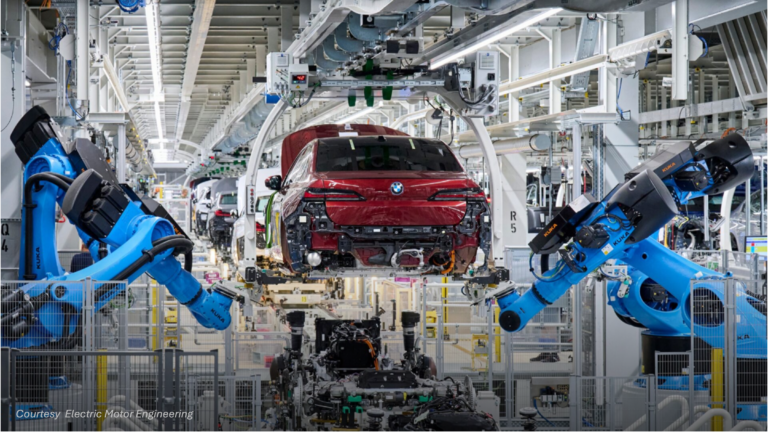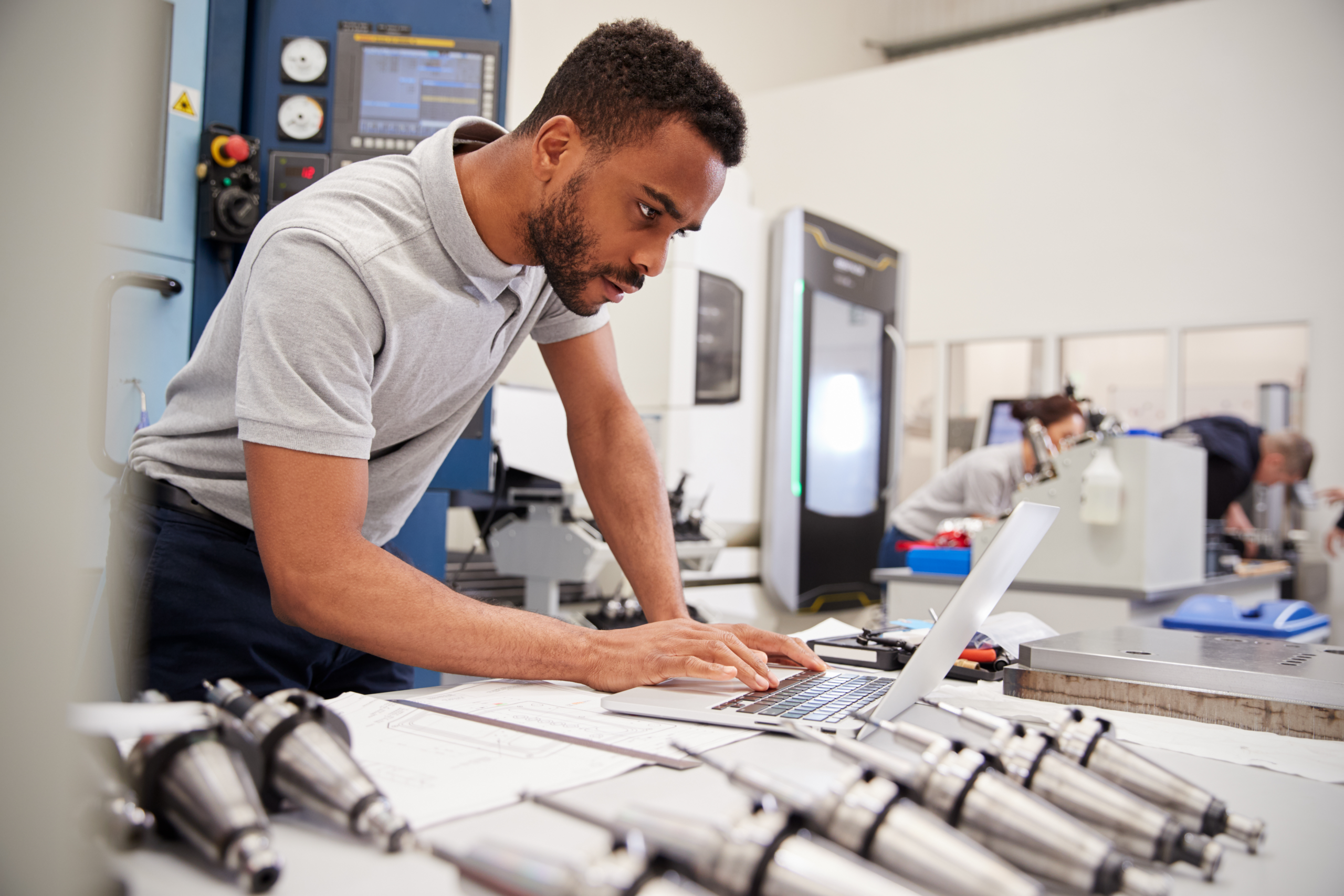

The traditional product design cycle has long been defined by sequential iteration: engineers create a concept, build a prototype, test it, identify flaws, and repeat. This process routinely consumes months of development time and significant resources before a single production-ready component emerges. That paradigm is now being fundamentally disrupted. Organizations deploying generative AI in product design are compressing timelines from weeks to minutes, achieving results that would have seemed impossible just five years ago.
The transformation is not incremental. HARTING, a global electronics manufacturer, reduced design time by 95% after implementing an AI-powered assistant integrated with Siemens NX CAD, enabling rapid creation of custom electrical connector prototypes. Boston Consulting Group research indicates that companies strategically deploying AI in R&D functions are realizing 10-20% reductions in time-to-market alongside up to 20% lower development costs. This is not optimization at the margins. It represents a structural shift in how products move from concept to production.
From Iteration to Exploration
Traditional computer-aided design operates on a fundamentally human-constrained model. An engineer conceives a shape, models it in software, runs simulations, identifies weaknesses, and manually revises the geometry. The process is linear and bounded by the designer’s experience, imagination, and available time. Even skilled engineers typically explore only a handful of design variations before settling on a solution.
Generative AI in product design inverts this approach. Rather than starting with a predefined shape, engineers define the problem: load requirements, material constraints, weight targets, manufacturing methods, and cost parameters. The AI then explores thousands or even millions of potential geometries, evaluating each against the specified criteria and surfacing optimized candidates that human designers would never conceive independently.
PTC’s Creo Generative Design extensions exemplify this capability, automatically generating manufacture-ready designs optimized for machining, casting, or additive processes. The system does not simply suggest shapes; it produces engineering-ready outputs that account for real-world production constraints from the outset. Gartner analysts note that generative design can explore design spaces to find solutions that humans may have missed entirely, optimizing simultaneously for performance, materials, and manufacturability.
The engineer’s role evolves correspondingly. Rather than serving as a CAD operator manually manipulating geometry, the designer becomes a conductor, defining objectives, evaluating AI-generated alternatives, and applying judgment to select optimal solutions. This shift does not diminish engineering expertise; it amplifies it by removing the mechanical burden of iteration and enabling focus on higher-order decision-making.
The Business Case: Quantifying the Impact
The performance improvements enabled by generative AI in product design are now well documented across multiple dimensions.
Time compression represents the most immediately visible benefit. Microsoft reports that Hexagon’s ProPlanAI solution reduces the time required to program factory machine tools by 75%, while HARTING’s implementation achieved a 95% reduction in configuration time for custom connectors. At the enterprise level, the World Economic Forum’s Global Lighthouse Network found that leading manufacturers leveraging AI and advanced digital technologies achieved 50% reductions in new product introduction times.
Cost and performance gains compound these time savings. General Motors partnered with Autodesk to redesign a seat bracket using generative design, producing a component that is 40% lighter and 20% stronger than its predecessor while consolidating eight separate parts into a single 3D-printed structure. Beyond the direct material and weight savings, the consolidation eliminated supply chain complexity associated with sourcing and assembling multiple components from different vendors. McKinsey estimates that generative AI could reduce manufacturing and supply chain expenses by up to half a trillion dollars globally.
Market momentum reflects growing enterprise confidence in these capabilities. The generative design software market reached $4.30 billion in 2025 and is projected to grow at a 14.82% compound annual rate through 2030, according to Mordor Intelligence. McKinsey’s 2025 State of AI survey found that 65% of organizations now regularly use generative AI in at least one business function, with product development ranking among the top areas for revenue impact.
Industry Pioneers: Transformation in Practice
The theoretical potential of generative AI finds concrete expression in implementations across automotive, aerospace, and industrial equipment sectors.
General Motors’ collaboration with Autodesk on the seat bracket project has become a reference case for generative AI in product design. Engineers input constraints including connection points, strength requirements, and target mass, and the software generated more than 150 valid design alternatives. The selected design, fabricated through metal additive manufacturing, achieved performance improvements that conventional optimization methods could not approach. GM’s Director of Additive Design and Manufacturing noted that the technology enables part-design solutions that would be impossible with either the computer or the engineer working independently.
Airbus has pursued generative design at even larger scale. The company’s bionic partition, a structural component separating the passenger cabin from the galley, achieved 45% weight reduction while maintaining full strength. Airbus calculated that deploying this approach across its A320 backlog could eliminate nearly half a million metric tons of CO2 emissions annually. The company has since extended generative methods to the vertical tail plane and is now applying the technology to factory layout optimization, demonstrating applicability beyond individual components to entire production systems.
Siemens, Microsoft, and Rolls-Royce demonstrated an integrated approach at Hannover Messe 2025, showcasing an AI-based digital thread for jet engine hydraulic pump components. The system connected design, simulation, manufacturing, and quality inspection in a unified workflow, producing components that were 25% lighter and 200% stiffer than conventional designs while incorporating automated quality assurance throughout the production process.
The Enabling Architecture: Digital Thread and Cloud Integration
Generative AI in product design delivers maximum value when embedded within a connected digital thread spanning the entire product lifecycle. Isolated generative tools can produce impressive geometries, but realizing production benefits requires seamless data flow from design through simulation, manufacturing, and inspection.
Cloud-based platforms are accelerating this integration. Siemens’ NX X delivers generative capabilities through a software-as-a-service model with built-in data management, while Autodesk’s Fusion 360 provides cloud-connected generative design accessible to organizations without extensive on-premise infrastructure. These platforms democratize capabilities that were previously available only to large enterprises with substantial IT resources.
NIST emphasizes that rapid prototyping through 3D printing enables test-and-iterate cycles that compress validation timelines dramatically. When generative outputs flow directly to additive manufacturing systems, organizations can produce and evaluate physical prototypes in hours rather than weeks, enabling multiple design-build-test cycles within timeframes that previously accommodated only a single iteration.
Implementation Considerations for Industrial Leaders
Organizations pursuing generative AI capabilities should focus initial efforts on high-value, high-iteration components where design exploration yields disproportionate returns. Structural brackets, housings, and load-bearing elements that must balance weight, strength, and manufacturability represent natural starting points.
Technical foundations extend well beyond simulation accuracy. The deeper challenge lies in creating closed-loop data architectures where manufacturing outcomes feed back into design constraints. IDC research highlights that manufacturers will accumulate 92 exabytes of data by 2030, yet most organizations struggle to connect design systems with production feedback in ways that enable continuous learning. Generative AI achieves its full potential when integrated into unified data platforms that capture not only geometric and material specifications but also tacit engineering knowledge, the hard-won insights about what actually works on the shop floor versus what performs well in simulation. Organizations that treat generative design as a standalone tool, disconnected from manufacturing execution systems and quality data, will realize only a fraction of available value. The competitive differentiator is not the algorithm itself but the richness of the constraint ecosystem feeding it.
Workforce development accompanies technical implementation. Gartner projects that 80% of the engineering workforce will require upskilling through 2027 as AI transforms design and manufacturing roles. The World Economic Forum’s Lighthouse research positions AI as an enabler of workforce development rather than a replacement, with leading organizations investing in training alongside technology deployment.
BCG’s framework for AI implementation emphasizes that algorithms account for only 10% of the value equation, with technology and data representing 20% and people and processes comprising the remaining 70%. Deloitte’s enterprise research reinforces this perspective, noting that scaling AI requires robust data governance, clear risk management protocols, and organizational alignment across technical and business functions.
The New Competitive Threshold
Generative AI in product design has crossed from experimental capability to competitive necessity. Organizations mastering these tools are compressing innovation cycles, reducing material consumption, and delivering differentiated products faster than competitors relying on traditional methods.
The question confronting industrial leaders is no longer whether to adopt generative capabilities but how rapidly they can integrate these technologies into existing engineering workflows. The transition from concept to production-ready in days rather than months requires deliberate investment in platforms, talent development, and cross-functional process integration. Those who move decisively will define the next generation of industrial competitiveness.
References
- Boston Consulting Group. “AI-Powered R&D.” Executive Perspectives, February 2025. https://media-publications.bcg.com/BCG-Executive-Perspectives-AI-Powered-RandD-EP1-14Feb2025.pdf
- Boston Consulting Group. “From Potential to Profit: Closing the AI Impact Gap.” April 2025. https://www.bcg.com/publications/2025/closing-the-ai-impact-gap
- Deloitte. “State of Generative AI in the Enterprise 2024.” https://www.deloitte.com/us/en/what-we-do/capabilities/applied-artificial-intelligence/content/state-of-generative-ai-in-enterprise.html
- Gartner. “Beyond ChatGPT: The Future of Generative AI for Enterprises.” https://www.gartner.com/en/articles/beyond-chatgpt-the-future-of-generative-ai-for-enterprises
- Gartner. “Gartner Says Generative AI will Require 80% of Engineering Workforce to Upskill Through 2027.” October 2024. https://www.gartner.com/en/newsroom/press-releases/2024-10-03-gartner-says-generative-ai-will-require-80-percent-of-engineering-workforce-to-upskill-through-2027
- General Motors / Autodesk. “Generative Design in Car Manufacturing.” https://www.autodesk.com/customer-stories/general-motors-generative-design
- IDC. “The AI-Driven Future of Manufacturing.” November 2025. https://blogs.idc.com/2025/11/12/charting-the-ai-driven-future-of-manufacturing/
- McKinsey & Company. “Harnessing generative AI in manufacturing and supply chains.” March 2024. https://www.mckinsey.com/capabilities/operations/our-insights/operations-blog/harnessing-generative-ai-in-manufacturing-and-supply-chains
- McKinsey & Company. “The State of AI in 2025.” November 2025. https://www.mckinsey.com/capabilities/quantumblack/our-insights/the-state-of-ai
- Microsoft. “Shaping the Future of Product Engineering and R&D with Generative AI.” April 2025. https://www.microsoft.com/en-us/industry/blog/manufacturing-and-mobility/manufacturing/2025/04/03/shaping-the-future-of-product-engineering-and-research-and-development-with-generative-ai/
- Mordor Intelligence. “Generative Design Market.” September 2025. https://www.mordorintelligence.com/industry-reports/generative-design-market
- NIST. “What’s Coming for US Manufacturing in 2025.” February 2025. https://www.nist.gov/blogs/manufacturing-innovation-blog/whats-coming-us-manufacturing-2025
- PTC. “What Is Generative Design?” 2025. https://www.ptc.com/en/technologies/cad/generative-design
- Siemens. “Siemens, Microsoft, and Rolls-Royce: Digital Transformation with AI at Hannover Messe 2025.” July 2025. https://blogs.sw.siemens.com/nx-manufacturing/siemens-microsoft-and-rolls-royce-collaborated-to-demonstrate-the-power-of-digital-transformation-with-ai-at-hannover-messe-2025/
- World Economic Forum. “Global Lighthouse Network 2025.” January 2025. https://www.weforum.org/press/2025/01/global-lighthouse-network-2025-world-economic-forum-recognizes-companies-transforming-manufacturing-through-innovation/