
I. Introduction: The Convergence of Two Revolutions
The manufacturing sector stands at a remarkable inflection point. Two powerful forces, digital transformation and distributed work models, are converging to reshape what operational excellence means and how it’s achieved. This isn’t simply about adopting new technologies or accommodating remote workers. It’s a fundamental reimagining of how manufacturing operations are designed, managed, and optimized.
For decades, operational excellence in manufacturing followed a well-established playbook. Lean principles eliminated waste. Six Sigma reduced variation. Total Productive Maintenance maximized equipment effectiveness. These methodologies, born from the Toyota Production System and refined over half a century, delivered consistent results. Companies that mastered them gained competitive advantage.
But the playbook is being rewritten. The World Economic Forum’s Global Lighthouse Network now recognizes 172 manufacturing facilities worldwide that have achieved breakthrough performance through Fourth Industrial Revolution technologies. These “lighthouses” aren’t just incrementally better, they’re achieving productivity gains, quality improvements, and sustainability outcomes that traditional approaches simply cannot match.
Simultaneously, the nature of manufacturing work itself is evolving. Data shows that on-site manufacturing workers decreased from 91.6% in 2018 to 75.5% in 2023. Remote monitoring, distributed decision-making, and virtual collaboration have moved from emergency measures to standard operating procedures. A McKinsey survey found that 94% of companies using Industry 4.0 technologies reported these capabilities were critical to their crisis response during recent disruptions.
This convergence creates both opportunity and imperative. Smart manufacturing, the integration of connected technologies, data analytics, and intelligent automation, is no longer a future aspiration. It’s the present reality for industry leaders and an urgent priority for everyone else. According to Deloitte’s 2025 Smart Manufacturing and Operations Survey of 600 executives, 92% of manufacturers believe these capabilities will be the main driver of competitiveness over the next three years.
The question facing manufacturing leaders today isn’t whether to pursue this transformation, but how to execute it effectively while maintaining operational performance. This article examines how operational excellence is evolving, what technologies and practices are enabling remote-capable operations, and how organizations can successfully navigate this transition.
II. The Evolution of Operational Excellence: From Lean to Lean 4.0
The Foundation: Traditional Operational Excellence
The modern concept of operational excellence traces its roots to post-World War II Japan, where Toyota developed a production system that would revolutionize manufacturing worldwide. The Toyota Production System introduced principles that remain foundational today: eliminating waste (muda), reducing variation, respecting people, and pursuing continuous improvement (kaizen).
These principles evolved into Lean manufacturing, which spread globally through the 1980s and 1990s. Six Sigma, developed at Motorola and popularized by General Electric, added statistical rigor to quality improvement. Total Productive Maintenance addressed equipment reliability. Together, these methodologies created a comprehensive toolkit that enabled companies like Toyota, Danaher, and Procter & Gamble to achieve sustained productivity improvements of 6% or more annually.
Yet these approaches have natural limits. As one industry analysis notes, the complexities of modern manufacturing, serving demanding customers with rapidly increasing numbers of products and services, have tested what traditional Lean and Six Sigma can deliver on their own. The methodologies were designed for a different era, one with more stable demand patterns, simpler product portfolios, and workforces concentrated in single locations.
The Digital Acceleration
Industry 4.0 technologies don’t replace traditional operational excellence, they amplify it. Boston Consulting Group’s research on what they term “Lean Industry 4.0” demonstrates that manufacturers successfully integrating both approaches can reduce conversion costs by as much as 40% over five to ten years. This substantially exceeds the results from deploying either lean methods or digital technologies independently.
The difference lies in how digital tools address limitations inherent in manual approaches. Traditional continuous improvement methods typically yield 2-4% annual efficiency gains, meaningful, but incremental. Bain & Company’s research shows that companies implementing digital operations effectively achieve production efficiency gains of 15-20%, along with improved flexibility and quality. Digital technologies enable real-time visibility, predictive rather than reactive decision-making, and optimization at speeds and scales impossible for human analysis alone.
Consider predictive maintenance as an example. Traditional Total Productive Maintenance relies on scheduled interventions and operator observations to prevent equipment failures. Digital approaches analyze continuous streams of sensor data, vibration patterns, temperature trends, power consumption, to predict failures before they occur. The result isn’t just fewer breakdowns; it’s optimized maintenance timing that maximizes both equipment availability and maintenance resource utilization.
The Five Elements of Next-Generation Operational Excellence
McKinsey’s research identifies five elements that distinguish organizations achieving next-generation operational excellence:
Purpose and Strategy: High-performing organizations articulate a clear purpose that connects operational activities to meaningful outcomes. This goes beyond financial targets to encompass employee engagement, customer value, and increasingly, environmental sustainability.
Management Systems: Traditional management systems focused on tracking and responding to performance gaps. Next-generation systems emphasize real-time visibility, predictive insights, and rapid problem-solving enabled by connected data.
Technology Backbone: The underlying infrastructure of sensors, connectivity, data platforms, and analytical tools that enable digital operations. This isn’t technology for its own sake, but technology purposefully deployed to address specific operational challenges.
Capability Building: The skills and knowledge required to operate in a digital environment. This encompasses both technical capabilities, data literacy, digital tool proficiency, and adaptive capabilities like problem-solving and continuous learning.
Performance Management: How organizations measure, review, and improve performance. Next-generation approaches emphasize leading indicators, real-time feedback, and distributed accountability enabled by transparent data access.
Organizations excelling across all five elements remain rare. McKinsey’s survey data shows that few organizations have achieved high maturity across every element, but those that have are setting new performance benchmarks that competitors struggle to match.
III. The Smart Factory: Architecture for Remote-Enabled Operations
Defining the Smart Factory
The smart factory represents a fundamental shift from traditional automation. Where conventional automated facilities execute pre-programmed sequences, smart manufacturing environments continuously sense, analyze, and adapt. Deloitte describes this as “a fully connected and flexible system that can use a constant stream of data from connected operations and production systems to learn and adapt to new demands.”
This definition highlights several critical characteristics. First, connectivity: every asset, process, and increasingly every worker generates data that feeds into integrated systems. Second, flexibility: the ability to respond to changes in demand, product mix, or operating conditions without lengthy reconfiguration. Third, learning: systems that improve over time through accumulated data and refined algorithms.
The practical implications are profound. A smart factory can predict equipment failures before they cause downtime, automatically adjust production schedules based on real-time demand signals, identify quality issues at their source rather than at final inspection, and optimize energy consumption across shifting production patterns. Critically for the remote operations theme, these capabilities don’t require constant human presence, they enable monitoring, management, and intervention from anywhere.
Core Enabling Technologies
Six technology categories form the foundation of smart factory capabilities:
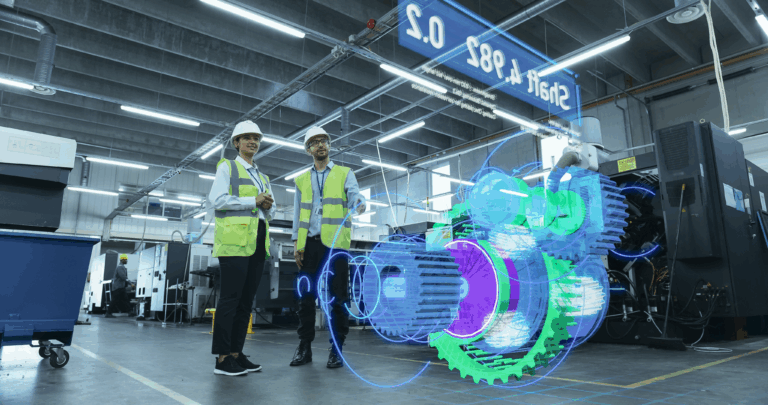
Digital Twins create virtual replicas of physical assets, production lines, or entire facilities. These aren’t static models but dynamic representations continuously updated with real-time operational data. Manufacturers use digital twins to simulate changes before implementing them, predict how equipment will behave under different conditions, and enable remote experts to “see” what’s happening on a production line thousands of miles away. Gartner projects the digital twin market will reach $183 billion by 2031, reflecting the technology’s expanding applications.
Industrial Internet of Things (IIoT) encompasses the sensors, connectivity infrastructure, and edge computing that capture operational data. Modern production equipment generates enormous data volumes, a single CNC machine might produce thousands of data points per second. IIoT infrastructure collects, filters, and transmits this data to enable the analytics that drive smart factory capabilities. A PTC survey found IIoT adoption in manufacturing functions at 46%, more than double the rate in service or general operations areas.
Artificial Intelligence and Machine Learning transform raw data into actionable insights. Applications range from predictive maintenance algorithms that anticipate equipment failures to computer vision systems that detect quality defects invisible to human inspectors. Generative AI is adding new capabilities, including natural language interfaces to production data and AI-assisted troubleshooting. According to a McKinsey Global Survey, 40% of organizations are increasing AI investment specifically because of advances in generative AI.
Cloud and Edge Computing provide the processing power and data storage that smart factories require. Cloud platforms enable scalable analytics and cross-facility data aggregation, while edge computing processes time-sensitive data locally to enable real-time response. The combination allows organizations to balance immediate operational needs with enterprise-wide optimization.
Augmented and Virtual Reality bridge physical and digital environments for human users. AR applications overlay digital information onto physical environments, guiding maintenance technicians through complex repairs, enabling remote experts to see what on-site workers see, or providing operators with real-time performance data without requiring them to leave their stations. VR enables immersive training and simulation. Together, these technologies extend human capabilities across distances.
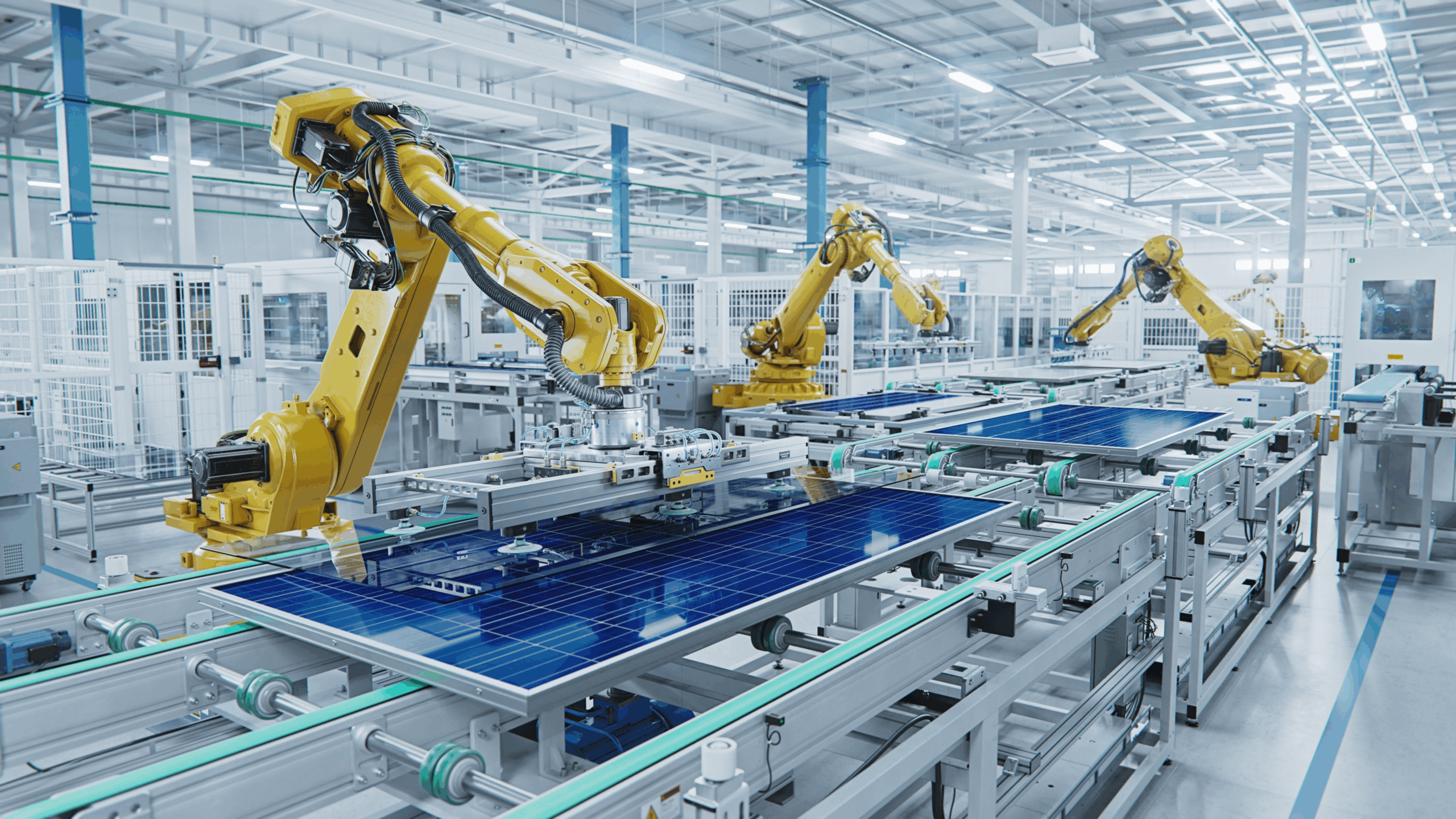
Advanced Robotics has evolved from isolated automated cells to flexible, collaborative systems. Cobots (collaborative robots) work alongside human operators, handling repetitive or physically demanding tasks while humans manage complexity and exceptions. Autonomous mobile robots transport materials without fixed infrastructure. These systems increasingly incorporate AI to adapt to changing conditions rather than simply executing programmed routines.
The Connected Ecosystem
Individual technologies deliver value, but the greater opportunity lies in integration. PwC’s research on “Digital Champions”, the roughly 10% of manufacturers achieving highest digital maturity, emphasizes their ability to integrate four critical ecosystems: Customer Solutions, Operations, Technology, and People.
This integration manifests in several ways. Horizontal integration connects functions across the value chain, product development, procurement, manufacturing, logistics, and service share data and coordinate decisions. Vertical integration links shop floor systems with enterprise platforms, enabling real-time visibility from individual machine performance to company-wide KPIs. End-to-end integration extends beyond company boundaries to suppliers and customers, enabling coordinated planning and responsive execution across the entire value network.
For remote operations, this connectivity is essential. Managers can monitor production status because IIoT data flows to accessible dashboards. Engineers can troubleshoot equipment remotely because digital twins and AR provide visibility into physical systems. Decisions can be made from anywhere because integrated data provides the context needed for informed choices.
IV. Remote Operations: Beyond Crisis Response
The Pandemic Catalyst
COVID-19 forced manufacturing organizations to develop remote capabilities virtually overnight. Plants that had never considered operating with reduced on-site staff suddenly had no choice. The results challenged long-held assumptions about what required physical presence and what could be managed remotely.
Harvard Business Review data shows remote work spiked from approximately 6% of full workdays to more than 50% during the spring of 2020. While manufacturing’s physical nature prevented the wholesale shift seen in office work, the industry adapted more than many expected. Remote monitoring of production, virtual collaboration for problem-solving, and distributed management became standard practice.
McKinsey found that 94% of companies using Industry 4.0 technologies reported these capabilities were critical to their crisis response. Organizations with connected assets, real-time visibility, and digital collaboration tools maintained operations that others couldn’t. The gap between digitally mature and digitally lagging manufacturers widened dramatically.
What Changed Permanently
The pandemic’s end didn’t mean a return to pre-2020 norms. Deloitte and Manufacturing Institute research shows manufacturing’s on-site workforce percentage declined from 91.6% in 2018 to 75.5% in 2023. More significantly, expectations have shifted. Flexible work arrangements have become important factors in talent attraction and retention, particularly critical given the industry’s workforce challenges.
Remote capabilities proved valuable for reasons beyond pandemic response. Organizations discovered that:
Remote monitoring improves responsiveness. When production data flows to accessible systems, problems get attention faster regardless of where relevant personnel are located. Night shifts and weekend operations gain access to expertise previously available only during regular hours.
Remote expertise extends reach. A specialist who previously could support one facility can now assist many. Equipment vendors can diagnose issues without dispatching technicians. This capability is especially valuable for facilities in remote locations or regions with limited technical talent pools.
Data-driven decisions don’t require physical presence. When relevant information is accessible through digital systems, many decisions previously made during plant floor walk-throughs can be made from anywhere. This doesn’t replace the value of physical presence, but it does enable more informed remote decision-making.
Flexibility creates resilience. Organizations capable of operating with distributed teams proved more adaptable to disruptions. This resilience value extends beyond pandemics to other scenarios, severe weather, facility incidents, or simply key personnel traveling.
Remote Operations Capabilities
Effective remote manufacturing operations rest on several integrated capabilities:
Real-time Production Visibility enables remote monitoring of production status, equipment running, quantities produced, quality metrics, and schedule adherence. The World Economic Forum describes how Schneider Electric implemented technologies providing operations visibility through dashboards displaying “what’s happening in every corner of the 14,000-square-metre shop floor, giving on-site operators and remote teams real-time updates, alerts and data-driven insights.”
Predictive Asset Intelligence extends monitoring to equipment health. Sensor data analyzed by machine learning algorithms predicts potential failures before they occur, enabling maintenance intervention regardless of where the maintenance planner or reliability engineer is located. For remote experts and equipment vendors, this capability enables condition-based support rather than scheduled site visits.
Remote Collaboration Tools bridge distances for problem-solving and knowledge transfer. AR-enabled devices allow field personnel to share their view with remote experts who can guide troubleshooting or repairs. Video conferencing combined with shared access to production data enables effective remote participation in operational reviews.
Distributed Decision Support puts relevant information in the hands of decision-makers wherever they are. Mobile-accessible dashboards, alert systems, and analytical tools enable operations leaders to stay informed and intervene when necessary without constant physical presence.
V. The Human Element: Workforce Transformation
The Skills Gap Challenge
Technology alone doesn’t transform operations, people do. Yet manufacturing faces an unprecedented workforce challenge. The 2024 Deloitte and Manufacturing Institute Talent Study projects US manufacturing will require 3.8 million net new employees by 2033. Meanwhile, a skills gap may leave 2.1 million positions unfilled by 2030. The World Economic Forum estimates the economic impact of unfilled manufacturing positions at $2.5 trillion between 2018 and 2028.
This shortage isn’t just about numbers. The skills required are evolving rapidly. Operators need data literacy to work with digital tools. Maintenance technicians need familiarity with connected systems. Engineers need capabilities spanning both physical systems and digital technologies. Leaders need to manage distributed teams and make decisions from data rather than direct observation.
Traditional talent pipelines haven’t kept pace with these changing requirements. Manufacturing often struggles with perception challenges, viewed as outdated or offering limited career growth despite the reality of increasingly sophisticated, technology-rich environments. Remote and flexible work options, common in other sectors, have been rare in manufacturing, limiting its appeal to workers who value such arrangements.
New Roles in the Digital Factory
Smart manufacturing environments create new roles that didn’t exist in traditional factories:
Industrial Data Scientists analyze production data to identify improvement opportunities, develop predictive models, and translate analytical insights into operational actions. These roles require understanding of both data science techniques and manufacturing processes, a combination relatively rare in the talent market.
Robot Coordinators oversee increasingly autonomous robotic systems. As robots become more flexible and AI-enabled, managing these systems requires new skills beyond traditional automation programming.
Digital Maintenance Technicians combine mechanical and electrical skills with digital capabilities, using AR for guided repairs, interpreting sensor data for condition-based maintenance, and collaborating with remote experts through connected tools.
Remote Operations Specialists monitor and support multiple facilities from centralized locations, interpreting data streams, coordinating responses, and enabling local teams with specialized expertise.
Boston Consulting Group’s research on Industry 4.0 workforce implications emphasizes that these changes benefit many workers. Older employees can extend their careers when robotic assistance supports physically demanding tasks. Digital tools can guide less experienced workers through complex procedures. Remote capabilities allow expertise to be leveraged more broadly.
Upskilling and Change Management
The Deloitte 2025 Survey found that 35% of executives cite “adapting workers to the Factory of the Future” as a top concern, ranking higher than enterprise culture or even health and safety. Yet the same survey found that human capital had the lowest maturity level of all smart manufacturing categories assessed.
Successful workforce transformation requires:
Frontline Engagement from the Start. MIT Sloan research emphasizes that successful Industry 4.0 implementations engage operators and technicians early. These workers understand process realities that determine whether new technologies succeed or fail. Their input improves solutions; their buy-in accelerates adoption.
Accessible Skill Building. Training must accommodate working learners and diverse starting points. Digital learning platforms, AR-guided on-the-job training, and modular skill building enable upskilling without extended time away from production roles.
Clear Value Communication. Workers need to understand how new technologies benefit them, not just the organization. When digital tools make work safer, reduce tedious tasks, enable more interesting problem-solving, or create career growth opportunities, people become advocates rather than resisters.
Leadership Modeling. Operational leaders must demonstrate comfort with digital tools and data-driven decision-making. When supervisors and managers actively use new capabilities, adoption throughout the organization accelerates.
The Deloitte survey offers encouraging data on this point: 85% of respondents believe smart manufacturing initiatives will attract new talent to the industry, positioning manufacturing as a vibrant and viable career path. Technology-rich environments appeal to younger workers; remote and flexible arrangements expand the potential talent pool.
VI. Implementation: Escaping “Pilot Purgatory”
The Scale Problem
Perhaps the most consistent finding across consulting research is the gap between pilot success and enterprise-wide transformation. Bain & Company found that 66% of US manufacturing executives are making significant investments to digitalize operations, but only 25% are rolling out solutions enterprise-wide. MIT Sloan reports that despite widespread access to Industry 4.0 technologies, 70% of organizations struggle or fail to achieve their objectives.
The consequences of stalled transformation are significant. Bain’s research on machinery and equipment manufacturers found that companies leave 30-50% of productivity value on the table as they fail to scale their factory of the future initiatives. Harvard Business Review data shows that while 89% of large companies globally have digital and AI transformation underway, they’ve captured only 31% of expected revenue lift and 25% of expected cost savings.
McKinsey identifies common failure patterns:
Siloed Implementation occurs when digital transformation proceeds as a theoretical exercise, disconnected from business leaders, site operations, and central IT. Independent delivery teams may produce interesting pilots that lack pathways to scale.
Technology-First Approaches deploy solutions without clear links to real value opportunities or business challenges. Technology selection based on vendor promises or competitive anxiety rather than operational need rarely delivers sustainable results.
Analysis Paralysis happens when organizations attempt comprehensive network-wide analysis before beginning. Exhaustive planning consumes resources and delays action, sometimes until competitive windows close.
Waiting for Perfection delays deployment until ideal-state data architecture and IT/OT systems are fully defined and implemented. Organizations lose the learning from pragmatic early implementations while waiting for theoretical optimums.
Failure to Adapt treats digital transformation as one-size-fits-all. Approaches that work at one facility may not suit another with different culture, equipment vintage, or product mix. Effective transformation requires customization while maintaining standards.
Success Factors from Industry Leaders
Organizations that successfully scale digital operations share several practices:
Start with Strategy, Not Technology. Bain advocates a “future-back” approach: define how production should function in five or ten years, then select technologies that advance that vision. This contrasts with bottom-up experimentation that may produce isolated successes without strategic coherence.
The strategic questions come first: What will our network look like? What capabilities will we need? What level of product differentiation do we want? What customer experience must we deliver? Answers to these questions guide technology selection rather than following it.
Connect to Real Value Opportunities. Successful implementations target specific, measurable improvements. BCG’s Innovation Center for Operations approach begins with identifying operational challenges, then matching technologies to solutions. This ensures new capabilities address genuine needs rather than seeking problems for interesting technologies.
Quantifying value before implementation creates accountability. When leaders commit to specific efficiency gains, quality improvements, or flexibility enhancements, implementation teams have clear targets. Without such targets, even successful pilots may lack the demonstrated value needed to justify scaling investment.
Think Big, Start Small, Scale Fast. Deloitte’s approach, prove value quickly, build iterative capabilities, avoid boiling the ocean, appears consistently across successful transformations. Organizations need early wins that demonstrate possibility and build organizational confidence. But they also need a vision of full-scale transformation that gives early wins a pathway to broader impact.
The World Economic Forum’s Lighthouse model exemplifies this approach. Organizations identify specific sites or value streams for initial transformation, then use success at these “lighthouses” to guide network-wide scaling. Initial sites become learning laboratories and demonstration facilities for the broader organization.
Build Minimal Viable Architecture. McKinsey advocates pragmatic IT/OT integration that enables current use cases while establishing foundations for future expansion. This contrasts with attempting to design complete future-state architecture before deploying any new capabilities.
Modern approaches increasingly leverage cloud platforms and edge computing that can coexist with legacy systems while enabling new capabilities. Complete infrastructure replacement isn’t a prerequisite for progress; integration approaches can bridge old and new.
Engage People from the Start. Technology implementations that treat workforce change as an afterthought consistently underperform. MIT Sloan’s research on Industry 4.0 implementation emphasizes that front-line engagement is prerequisite, not follow-on.
Workers who help design new processes adopt them more readily. Their operational knowledge identifies implementation pitfalls that engineers might miss. Their involvement builds commitment that communications campaigns cannot replicate.
Creating Self-Funding Transformation
McKinsey’s network scan approach identifies where transformation value concentrates. Typically, a subset of sites and value streams represent the large majority of improvement potential. Focusing initial effort on these high-value targets creates returns that fund subsequent phases.
The mathematics are compelling. An industrial company that McKinsey studied began with a successful lighthouse implementation, then conducted a network scan across more than a dozen sites. The analysis identified five sites that together represented approximately 80% of the value at stake across the network. Prioritizing these sites concentrated effort where it mattered most.
This approach transforms digital initiatives from cost centers requiring continuous justification into value engines that fund their own expansion. As BCG notes, by partnering with technology providers and implementing proven use cases, companies can achieve measurable results in three to six months, time frames that maintain organizational momentum and demonstrate tangible progress.
VII. Measuring Success: The New Metrics of Operational Excellence
Beyond Traditional KPIs
Traditional operational metrics, OEE, scrap rates, cycle times, labor productivity, remain relevant but insufficient. Smart manufacturing enables measurement approaches that weren’t previously possible and demands new ways of understanding performance.
Real-time visibility changes the fundamental nature of operational measurement. Traditional metrics often relied on batch data collected periodically, shift reports, weekly quality summaries, monthly production reviews. Connected systems generate continuous data streams that enable real-time understanding of current state rather than historical snapshots.
This shift enables movement from lagging to leading indicators. Traditional metrics report what happened; connected systems can predict what will happen. Predictive quality indicators flag potential issues before defects occur. Equipment health metrics anticipate failures before they cause downtime. Demand sensing indicators identify changing patterns before they create inventory imbalances.
The Value Framework
Organizations implementing smart manufacturing measure value across multiple dimensions:
Productivity and Efficiency remain foundational. BCG’s research documents 10-15% short-term efficiency gains and 20-40% long-term improvements from effective Industry 4.0 implementation. Bain’s data shows 15-20% production efficiency gains. PwC’s survey found companies expecting 3.6% annual cost reduction and 4.1% efficiency improvement.
Quality and Yield often improve alongside efficiency. Real-time monitoring catches deviations before they propagate. Predictive analytics identify conditions that precede quality issues. Computer vision inspects with consistency and sensitivity exceeding human capabilities.
Flexibility and Agility become measurable through changeover times, response to demand variation, and new product introduction speed. These metrics gain importance as customer expectations for customization and responsiveness increase.
Workforce Engagement and Safety reflect the human impact of transformation. Engagement improves when technology reduces tedious tasks and enables more meaningful work. Safety improves when sensors detect hazards and automation handles dangerous activities.
Sustainability and Environmental Impact increasingly factor into operational excellence metrics. The World Economic Forum now designates “Sustainability Lighthouses” specifically recognizing manufacturers using Industry 4.0 technologies to reduce environmental impact. These organizations demonstrate that operational and environmental performance can advance together.
Building the Business Case
Return on investment data supports aggressive smart manufacturing investment. The World Economic Forum found that most companies expect ROI within two years or less for Industry 4.0 projects. Very few anticipate payback taking longer than five years.
Specific value examples from WEF’s Lighthouse research illustrate the potential:
Schneider Electric’s 60-year-old US plant implemented augmented reality, remote monitoring, and predictive maintenance, achieving 20% improved customer satisfaction, 20% better demand forecast accuracy, and 26% reduced energy costs, while eliminating 90% of paperwork.
A Foxconn facility utilized AI and IoT to track carbon footprints and optimize recycling, achieving 42% reduction in Scope 3 emissions while increasing recycled material content to 55-75%.
A nuclear power facility deployed more than 40 Industry 4.0 use cases, maintaining a 0% safety accident rate while improving labor productivity by 18% and reducing major overhaul periods by 46%.
These aren’t theoretical projections; they’re documented outcomes from operating facilities that have made the transformation.
VIII. The Road Ahead: Emerging Trends
Generative AI and Agentic AI in Manufacturing
The rapid advancement of generative AI is creating new possibilities for smart manufacturing. While early Industry 4.0 implementations focused on descriptive and predictive analytics, understanding what happened and what might happen, generative and agentic AI enable prescriptive and autonomous capabilities.
Gartner’s Strategic Technology Trends for 2026 highlight several developments relevant to manufacturing:
Domain-Specific Language Models (DSLMs) trained on manufacturing data deliver higher accuracy for specialized tasks than general-purpose models. Applications include maintenance troubleshooting, quality root cause analysis, and process optimization. Gartner predicts that by 2028, over half of enterprise generative AI models will be domain-specific.
Physical AI integrates artificial intelligence with robots, autonomous vehicles, and smart equipment that can perceive, decide, and act in physical environments. This bridges the gap between IT and operations, enabling increasingly autonomous production systems.
Agentic AI enables AI systems to take actions independently rather than simply providing recommendations. For manufacturing, this points toward truly autonomous operations where systems detect issues, determine solutions, and implement changes with minimal human intervention.
The Industrial Metaverse
The industrial metaverse, immersive digital environments linking real and virtual worlds, is moving from concept to implementation. MIT Sloan reports that ABI Research projects industrial metaverse market potential reaching $100 billion by 2030.
Practical applications are already emerging. Siemens used digital twin technologies to plan and simulate construction of a 73,000-square-meter factory in China, testing and validating the facility before construction began. BMW has implemented digital twin technology across its production facilities, creating real-time virtual models that enhance operational efficiency.
For remote operations, the industrial metaverse offers compelling possibilities: immersive remote presence in production environments, collaborative problem-solving in shared virtual spaces, and training that simulates physical experiences without physical risks.
Sustainability as Core Operating Principle
Environmental sustainability is converging with operational excellence rather than competing with it. The World Economic Forum’s Sustainability Lighthouses demonstrate this convergence:
Foxconn Industrial Internet achieved 42% reduction in Scope 3 emissions while maintaining operational excellence.
Midea’s Hefei washing machine facility reduced Scope 1 and 2 emissions by 36.4% while implementing Industry 4.0 technologies that improved production performance.
Digital technologies enable sustainability improvements previously impractical. Real-time energy monitoring identifies waste. Predictive maintenance extends equipment life. Digital simulation reduces physical prototyping. Connected supply chains enable circular economy models.
Genpact research found that 75% of manufacturers lack confidence in their partners’ and suppliers’ ability to support sustainability goals. This gap represents both a risk and an opportunity, organizations that build sustainable operations create competitive advantage while reducing environmental impact.
Resilient, Regionalized Networks
Global disruptions, pandemic, geopolitical tension, logistics challenges, have prompted fundamental rethinking of manufacturing networks. The World Economic Forum’s Global Rewiring report highlighted that 92% of companies are changing their manufacturing footprints toward more regional approaches.
Smart manufacturing technologies enable this regionalization. Automation reduces labor cost arbitrage that drove offshoring. Digital tools enable smaller, more flexible facilities closer to markets. Connected systems allow distributed networks to operate as coordinated wholes.
Bain’s research suggests automation could allow smaller factories to operate closer to consumers and deliver more customized products. This represents a fundamental shift from the mega-factory model that dominated recent decades.
IX. Conclusion: A Call to Action for Manufacturing Leaders
The convergence of digital transformation and distributed work has fundamentally changed what operational excellence means and how it’s achieved. The organizations leading this transformation, WEF’s Lighthouses, BCG’s Lean Industry 4.0 leaders, PwC’s Digital Champions, aren’t just incrementally ahead. They’re establishing performance standards that traditional approaches cannot match.
The gap between leaders and laggards is widening. Analysis shows leaders scoring 3.87 on digital maturity indexes while laggards remain at 1.80, a gap that will only grow as leaders compound their advantages through learning and scale effects. Organizations that delay transformation face not just relative decline but potential irrelevance.
Five imperatives emerge from this analysis:
Integrate digital with traditional methodologies. Industry 4.0 technologies amplify rather than replace Lean, Six Sigma, and TPM. BCG’s research shows integrated approaches delivering 40% cost reduction, far exceeding either approach alone. Organizations must build on operational excellence foundations while adding digital capabilities.
Build remote operations capabilities now. The workforce changes triggered by the pandemic are permanent. Remote monitoring, distributed decision-making, and virtual collaboration have moved from emergency measures to competitive requirements. Organizations that enable effective remote operations expand their talent pools and build resilience for future disruptions.
Invest in workforce transformation. Technology without people doesn’t transform anything. The organizations achieving breakthrough results engage frontline workers early, invest in skill building, and create cultures where digital capabilities are valued. With 3.8 million new manufacturing workers needed by 2033, making manufacturing attractive to digitally native workers is existential.
Move beyond pilots to enterprise transformation. The pilot purgatory phenomenon, two-thirds of companies investing but only one-quarter scaling, represents enormous wasted potential. Organizations must approach smart manufacturing strategically, connect initiatives to real value, and build mechanisms that carry successful pilots to network-wide implementation.
Embrace sustainability integration. Environmental and operational performance are converging. Organizations that treat sustainability as separate from operations miss opportunities to improve both simultaneously. The Sustainability Lighthouses demonstrate that digital technologies can drive environmental improvement while enhancing operational performance.
The technologies are proven. The business cases are documented. The implementation approaches are understood. What remains is execution, the discipline to transform aspiration into operational reality.
Manufacturing leaders face a choice. They can pursue incremental improvement within familiar paradigms, accepting gradual competitive erosion. Or they can embrace the transformation that industry leaders have demonstrated is possible, building operations that combine traditional excellence with digital capability.
The age of remote manufacturing has arrived. The question is whether your organization will lead it or be displaced by those who do.
References
Bain & Company. “Digital Operations: Don’t Depart Without a Strategy.” https://www.bain.com/insights/digital-operations-dont-depart-without-a-strategy/
Bain & Company. “Factory of the Future: How Industry 4.0 and AI Can Transform Manufacturing.” https://www.bain.com/insights/factory-of-the-future-how-industry-4-0-and-ai-can-transform-manufacturing/
Bain & Company. “Industry 4.0: Getting Digital Manufacturing Right.” https://www.bain.com/insights/industry-4-0-getting-digital-manufacturing-right/
Bain & Company. “Manufacturing Consulting.” https://www.bain.com/consulting-services/operations/manufacturing/
Bain & Company. “The Factory of the Future Could Boost Productivity by 30% or More.” Global Machinery & Equipment Report 2024. https://www.bain.com/insights/the-factory-of-the-future-could-boost-productivity-by-30-percent-or-more-global-machinery-and-equipment-report-2024/
Boston Consulting Group. “Industry 4.0 Strategy Consulting Services.” https://www.bcg.com/capabilities/manufacturing/industry-4.0
Boston Consulting Group. “Lean Meets Industry 4.0 and Operational Excellence.” https://www.bcg.com/publications/2017/lean-meets-industry-4.0
Boston Consulting Group. “Man and Machine in Industry 4.0: How Industry 4.0 Will Transform the Workforce.” https://www.bcg.com/publications/2015/technology-business-transformation-engineered-products-infrastructure-man-machine-industry-4
Deloitte. “2025 Smart Manufacturing and Operations Survey: Navigating Challenges to Implementation.” https://www.deloitte.com/us/en/insights/industry/manufacturing/2025-smart-manufacturing-survey.html
Deloitte. “Industry 4.0, Smart Factory, and Connected Manufacturing.” https://www.deloitte.com/us/en/insights/industry/manufacturing-industrial-products/industry-4-0/smart-factory-connected-manufacturing.html
Digitopia. “Digital Maturity Manufacturing Report: Benchmarks for 2024.” https://digitopia.co/impact-labs/reports/digital-maturity-manufacturing/
Gartner. “Gartner Identifies the Top Strategic Technology Trends for 2026.” https://www.gartner.com/en/newsroom/press-releases/2025-10-20-gartner-identifies-the-top-strategic-technology-trends-for-2026
Genpact. “5 Trends That Will Change the Manufacturing Industry in 2024.” https://www.genpact.com/insight/manufacturing-in-2024-and-beyond-experience-at-the-heart-of-change
IndustryWeek. “The Future of Operational Excellence for Manufacturing.” https://www.industryweek.com/operations/article/21963001/the-future-of-operational-excellence-for-manufacturing
Manufacturing.net. “Does Remote Work Still Make Sense?” https://www.manufacturing.net/industry40/article/22884924/does-remote-work-still-make-sense
McKinsey & Company. “Capturing the True Value of Industry 4.0: Digital Transformation in Manufacturing.” https://www.mckinsey.com/capabilities/operations/our-insights/capturing-the-true-value-of-industry-four-point-zero
McKinsey & Company. “Today’s Good to Great: Next-Generation Operational Excellence.” https://www.mckinsey.com/capabilities/operations/our-insights/todays-good-to-great-next-generation-operational-excellence
MIT Sloan Executive Education. “Implementing Industry 4.0: Leading Change in Manufacturing and Operations.” https://executive.mit.edu/course/implementing-industry-4.0/a056g00000URaZvAAL.html
MIT Sloan. “Industrial Sector Amped for Digital Transformation.” https://mitsloan.mit.edu/ideas-made-to-matter/industrial-sector-amped-digital-transformation
MIT Sloan. “Solve Real-World Problems with the Industrial Metaverse.” https://mitsloan.mit.edu/ideas-made-to-matter/solve-real-world-problems-industrial-metaverse
PTC. “A Guide to Digital Transformation in Manufacturing.” https://www.ptc.com/en/blogs/corporate/digital-transformation-in-manufacturing-guide
PwC. “Industry 4.0: Building the Digital Enterprise.” https://www.pwc.com/gx/en/industries/industries-4.0/landing-page/industry-4.0-building-your-digital-enterprise-april-2016.pdf
PwC Strategy&. “Global Digital Operations 2018 Survey: Digital Champions.” https://www.strategyand.pwc.com/gx/en/insights/industry4-0.html
World Economic Forum. “A New Systematic Approach for Future-Proofing Manufacturing.” https://www.weforum.org/stories/2025/01/181d73cd-4fd9-4c8a-b023-5e76f25c824b/
World Economic Forum. “How to Make Remote Work in Manufacturing a Reality.” https://www.weforum.org/stories/2021/05/the-future-of-remote-work-for-manufacturing/
World Economic Forum. “Industry 4.0.” https://www.weforum.org/stories/2016/05/industry-4-0/
World Economic Forum. “Manufacturing Reimagined: From Productivity to Profitable Growth.” https://www.weforum.org/stories/2021/01/manufacturing-reimagined-from-improved-productivity-to-profitable-growth/
World Economic Forum. “Now is the Time to Double Down on Transforming Industry.” https://www.weforum.org/stories/2023/01/davos23-industry-transformation-efficiency-productivity/
World Economic Forum. “World Economic Forum Recognizes Leading Companies Transforming Global Manufacturing with AI Innovation.” https://www.weforum.org/press/2024/10/world-economic-forum-recognizes-leading-companies-transforming-global-manufacturing-with-ai-innovation-bcdb574963/