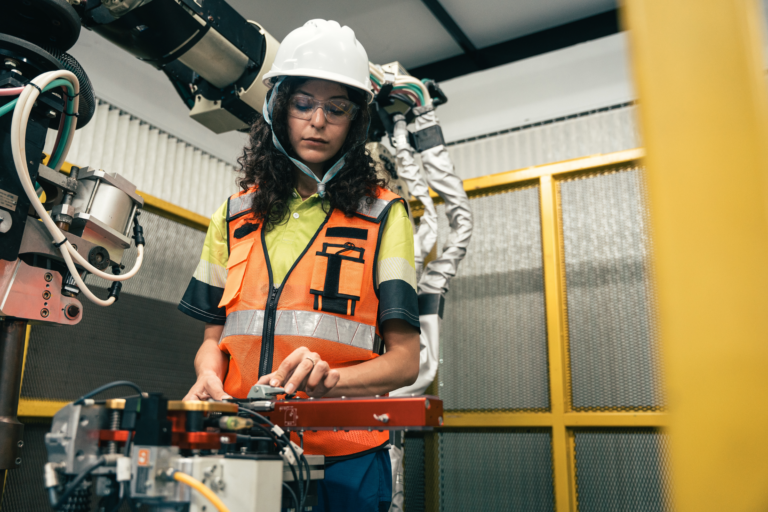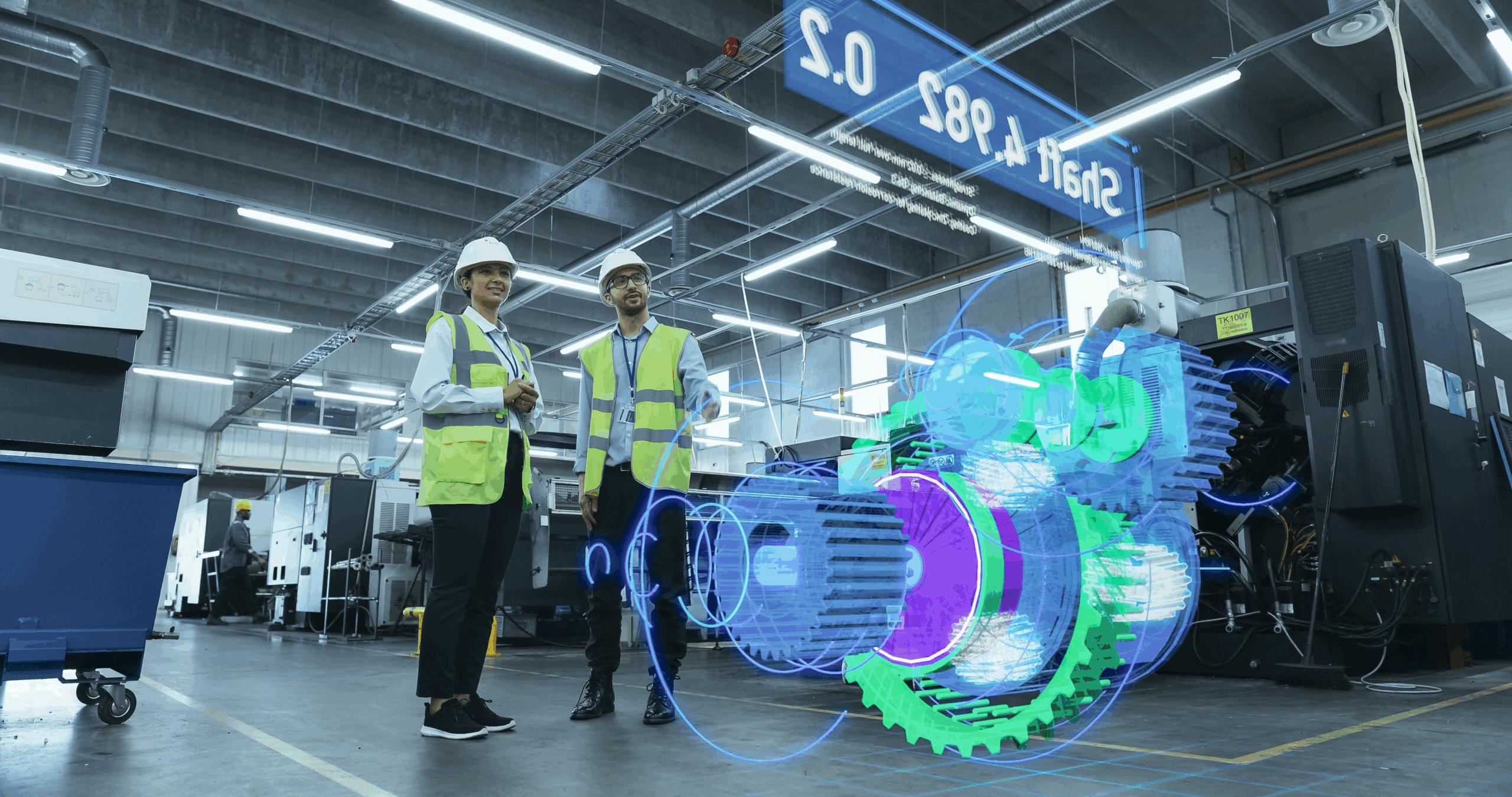

In the past, operational excellence was largely defined by control, by eliminating variability, standardizing processes, and ensuring flawless repeatability. We measured progress by how precisely we could document, measure, and improve. But as artificial intelligence begins to permeate industries from manufacturing to healthcare, a new dimension is taking shape, one that values not only precision but also adaptability, awareness, and learning.
The world’s best-run operations are no longer simply efficient. They are becoming cognitive.
This new phase doesn’t replace the discipline of operational excellence; it extends it. The mindset of Lean and Six Sigma, rigorous, data-driven, continuous improvement, is now merging with the intelligence of AI systems that see patterns humans can’t, make predictions in real time, and learn from outcomes at scale. The result is a powerful synergy: Productivity-Enhancing Technology Implementation grounded in human expertise and amplified by artificial intelligence.
From Process Discipline to Cognitive Agility
Operational excellence has always been about mastery, mastery of process, flow, and time. But today, agility has become the new benchmark. The Organisation for Economic Co-operation and Development (OECD, 2025) notes that AI adoption is widening the productivity gap between firms that deploy cognitive technologies and those that don’t. Companies capable of integrating AI into their operational DNA can adapt faster, waste less, and sustain higher margins over time.
The World Economic Forum and Boston Consulting Group (2025) describe this transition as the rise of Physical AI, intelligent systems embedded in machinery, robotics, and logistics that learn continuously from data. Unlike traditional automation, these systems are contextual. They interpret deviations, self-optimize, and even advise human operators on the best course of action.
McKinsey (2024) found that the most advanced “Lighthouse” manufacturers now extract up to 30 % greater efficiency from combining AI analytics with human decision frameworks. Harvard Business Review (2024) describes this as the dawn of cognitive factories, environments where operational control and creative problem-solving coexist seamlessly.
In this new paradigm, continuous improvement becomes continuous learning. Each cycle of optimization is informed not only by metrics but by intelligence, predictive, prescriptive, and adaptive. That’s the essence of a Productivity-Enhancing Technology Implementation strategy fit for the AI age.
The Cognitive Factory in Action
Industrial Precision – BMW, ABB, and Intel/LG Innotek
At BMW’s Regensburg plant, AI vision systems now inspect body components at production speed, detecting imperfections invisible to the human eye. The system, trained on thousands of images, flags anomalies instantly, allowing human technicians to focus on solving root causes rather than chasing defects. BMW reports significantly higher throughput and near-zero false rejections, operational excellence redefined through collaboration between humans and AI (BMW Group Press, 2024).
ABB brings the same logic to energy optimization. Its AI-driven monitoring platforms continuously analyze motor loads, power flows, and temperature variations, identifying inefficiencies before they become costly. The result: improved reliability and measurable sustainability gains (ABB Group, 2025).
Meanwhile, Intel and LG Innotek jointly developed a defect-detection solution for electronic components. By combining Intel’s AI acceleration hardware with LG’s optical sensors, they achieved a detection accuracy rate approaching 99.9 %, cutting inspection time dramatically (Intel Case Study, 2024). Each of these examples illustrates how cognitive capabilities elevate both performance and precision within the framework of Productivity-Enhancing Technology Implementation.
Cognitive Logistics – Walmart and DHL
While manufacturing captures the spotlight, logistics and retail are embracing cognitive operations just as aggressively. Walmart’s AI-powered supply chain now uses digital twin models to forecast demand, optimize routes, and even orchestrate pallet building in distribution centers. These systems integrate live data from weather, traffic, and consumer trends to adjust replenishment in real time (Walmart Tech Blog, 2024).
Similarly, DHL’s warehouses have evolved into orchestration platforms. Their AI layer coordinates fleets of autonomous robots, balancing workloads and predicting bottlenecks before they occur. This approach reduced average order-cycle time by double digits while boosting accuracy (DHL Delivered Magazine, 2024).
Both companies demonstrate that operational excellence in the AI era is no longer confined to production lines, it’s an end-to-end discipline spanning suppliers, logistics, and customer interfaces. When underpinned by structured Productivity-Enhancing Technology Implementation, the same principles of continuous improvement now apply to data flows and decision chains.
Beyond Industry – Airbus and Healthcare Command Centers
The idea of a “cognitive factory” extends well beyond traditional manufacturing. In aviation, Airbus’s Skywise platform aggregates terabytes of flight and maintenance data from global fleets. By detecting patterns invisible to ground crews, it predicts component failures and optimizes maintenance schedules, reducing aircraft downtime and saving millions in operational costs (Airbus Skywise, 2023).
In healthcare, cognitive operations are transforming hospital efficiency. At the Cleveland Clinic, GE HealthCare’s Command Center uses AI to monitor patient flow, bed availability, and emergency-room demand. The system provides clinicians with live recommendations to prevent capacity bottlenecks, shortening patient wait times and improving overall throughput (GE HealthCare, 2024).
These cases prove that the essence of a cognitive operation isn’t tied to a factory floor, it’s the convergence of data, decision, and discipline across any complex system.
Rewiring Human Roles – The Augmented Workforce
The common fear that AI will replace human expertise misunderstands what’s really happening on the ground. In most cognitive operations, AI is not eliminating work but elevating it. Operators are shifting from executing repetitive tasks to supervising intelligent systems, validating insights, and driving cross-functional improvements.
McKinsey (2024) highlights that companies investing in workforce upskilling realize faster productivity gains than those focusing solely on automation. ABB’s operators, for example, receive AI-driven performance dashboards that help them interpret system recommendations rather than override them. DHL’s staff train side-by-side with robots to optimize workflow and efficiency.
This collaborative model demands a new blend of skills: data literacy, contextual judgment, and systems thinking. In many ways, AI is becoming the newest member of the operational excellence team, amplifying human insight through continuous learning.
The lesson is clear: successful Productivity-Enhancing Technology Implementation depends as much on empowering people as on deploying algorithms.
Guardrails for Cognitive Excellence
For all its promise, cognitive automation introduces new risks, from data bias to over-reliance on opaque systems. Governance is becoming the next frontier of operational excellence.
The National Institute of Standards and Technology (NIST, 2024) released its AI Risk Management Framework 1.0 precisely to help organizations manage these challenges. It stresses transparency, explainability, and accountability as prerequisites for trustworthy AI. The OECD (2025) further warns that unequal access to AI expertise could deepen performance divides across regions and sectors.
Embedding governance within Productivity-Enhancing Technology Implementation means building feedback loops not just for machines, but for ethics, security, and compliance. In practice, that looks like auditing datasets, documenting decision logic, and ensuring every AI recommendation has a human review path.
Responsible cognitive operations uphold the same rigor that operational excellence has always demanded, only now, it’s applied to digital intelligence as well as physical processes.
The Next Frontier – Scaling Cognitive Operations
As industries move from pilots to enterprise-scale deployments, the question becomes how to sustain learning across networks of factories, suppliers, and service hubs. The World Economic Forum (2025) argues that the most resilient organizations are those treating AI not as a project but as an ecosystem, one that connects production data, workforce knowledge, and environmental metrics in continuous dialogue.
Accenture (2024) found that companies with next-generation supply chain capabilities achieved 23 % higher profitability through this integration. Yet profitability is only part of the story. What’s emerging is a culture of cognitive excellence: organizations where insights flow freely, decisions are data-informed, and systems are trusted partners in performance.
Operational excellence once meant perfecting what we already knew. Cognitive operations mean continuously discovering what we don’t know, and adapting faster than competitors when we learn it.
This is where Productivity-Enhancing Technology Implementation reaches its full potential: as a bridge between human intuition and machine intelligence, strategy and execution, precision and creativity.
Conclusion – The Cognitive Renaissance
We stand at a turning point. AI is not replacing operational excellence; it redefines it. The future belongs to enterprises that combine the discipline of yesterday with the intelligence of today, where every machine, process, and person becomes part of a learning system.
Whether in a factory, a logistics hub, or a hospital command center, the pattern is the same: knowledge is becoming operational. The real measure of excellence is no longer how tightly we control our processes, but how intelligently we allow them to evolve.
In this new era, cognition is the ultimate form of control, one that listens, learns, and leads. And for those ready to embrace it, the cognitive factory isn’t science fiction. It’s already here.
References
- BMW Group Press (2024). AI in Quality Assurance at Regensburg Plant.
- Walmart Corporate Blog (2024). Walmart’s Digital Twin and AI-Powered Supply Chain.
- DHL Delivered Magazine (2024). AI Orchestration and Robotics in Warehouses.
- Airbus (2023). Skywise Predictive Maintenance Platform.
- ABB Group (2025). AI-Enhanced Industrial Operations and Energy Optimization.
- Intel Case Study (2024). LG Innotek – AI Vision for Defect Detection.
- GE HealthCare (2024). Command Centers and Hospital AI Operations.
- World Economic Forum & Boston Consulting Group (2025). Physical AI: Powering the New Age of Industrial Operations.
- OECD (2025). Emerging Divides in the Transition to Artificial Intelligence.
- NIST (2024). AI Risk Management Framework 1.0.
- Accenture (2024). Next-Generation Supply Chain Capabilities Report.
- McKinsey (2024). How Manufacturing’s Lighthouses Are Capturing the Full Value of AI.
- Nelson et al. (2023). Applications and Societal Implications of AI in Manufacturing: A Systematic Review.
- Harvard Business Review (2024). Can AI Deliver Fully Automated Factories?